The end game for guitar picks - The FingerBlade





The Mechanics of Pick Control
The flat-pick problem
Traditional guitar picks are passive objects.
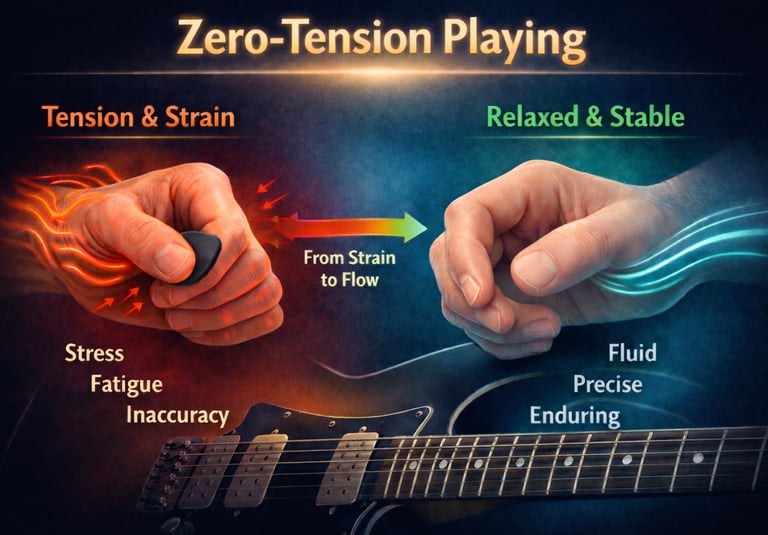
They depend on friction, grip pressure, and constant correction from the hand. When the pick begins to slip, rotate, or shift, the player usually compensates by squeezing harder.
That extra grip tension can reduce speed, accuracy, tone, and endurance.
Why it matters
At low intensity, pick instability can be easy to ignore.
At higher speed, stronger attack, or more precise playing, small movements matter. A pick that shifts even slightly forces the hand to compensate.
FingerBlade is designed to reduce that compensation by giving the picking hand a more stable interface with the string.
The FingerBlade difference
FingerBlade changes the relationship between the hand and the pick.
Instead of asking the player to control a flat object through grip pressure alone, FingerBlade gives the thumb and index finger clear physical reference points.
The pick becomes easier to locate, stabilize, and control without adding unnecessary tension.